

Jump to section
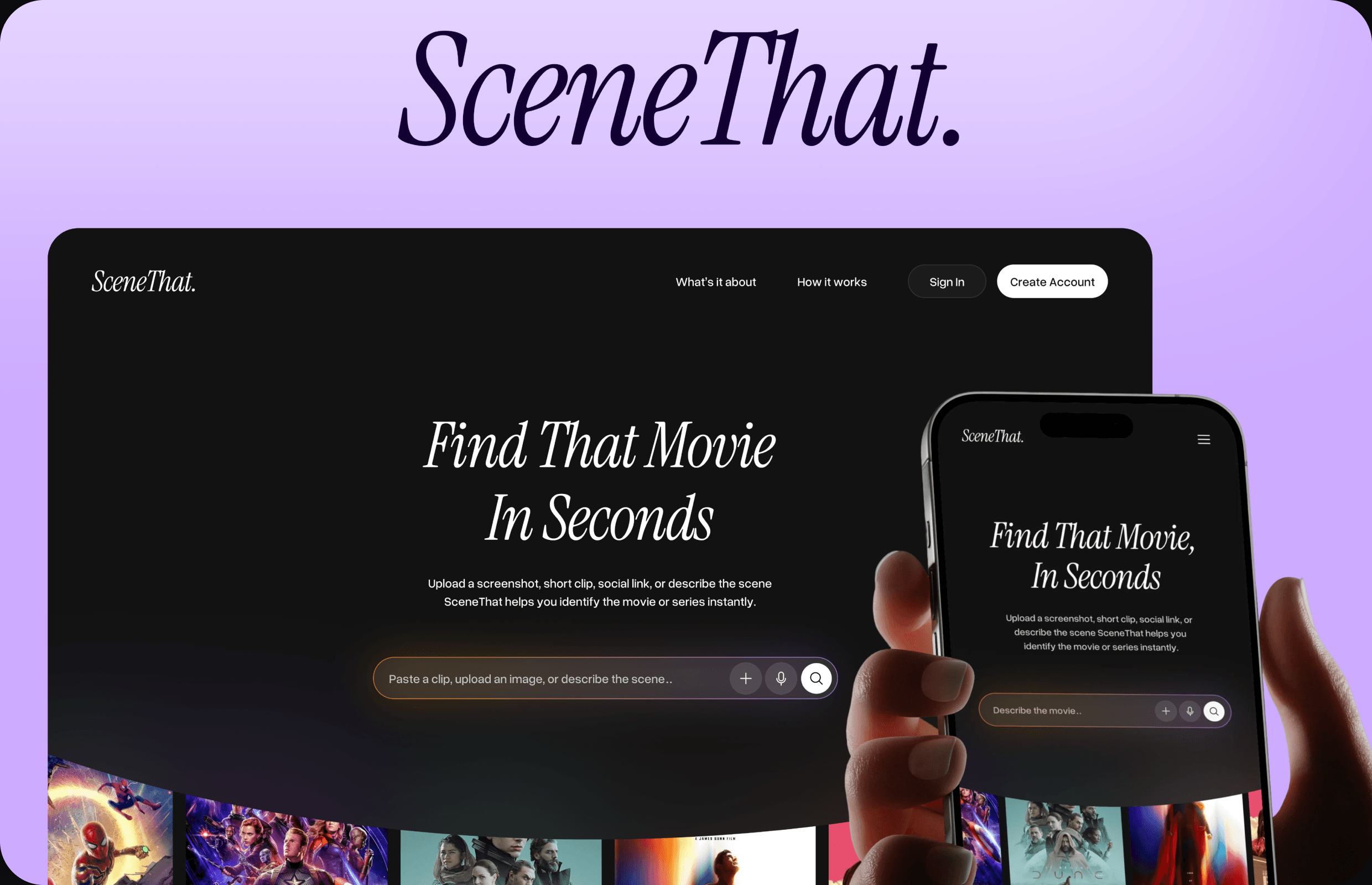
SceneThat — AI Movie Discovery Platform
Overview
SceneThat is a concept web platform that helps people identify movies and TV series from scenes instead of titles. Paste a clip, upload a screenshot, share a social link, or just describe a scene in plain text — and it returns the most likely match.
The idea came from a real, specific frustration: you scroll past a great movie clip on TikTok or X with no title, no context, no way to find the source. A moment of curiosity hits a dead end. SceneThat was designed to close that gap — and to make AI-driven discovery feel conversational and human rather than technical.
The Problem
People discover movies through fragments — a short clip, a screenshot, a scene shared in a group chat, a vague memory of a moment. But traditional search expects you to already know the title, the actors, or the right keywords. When that information is missing, discovery breaks down.
The question users are actually left with is simple: "What movie is this from?" Everything in SceneThat is built to answer it.
The Goal
Design a scene-first experience that:
- Works from incomplete or vague input
- Supports images, video, links, and text
- Feels fast, confident, and conversational
- Guides users from discovery through to where to watch
Design System
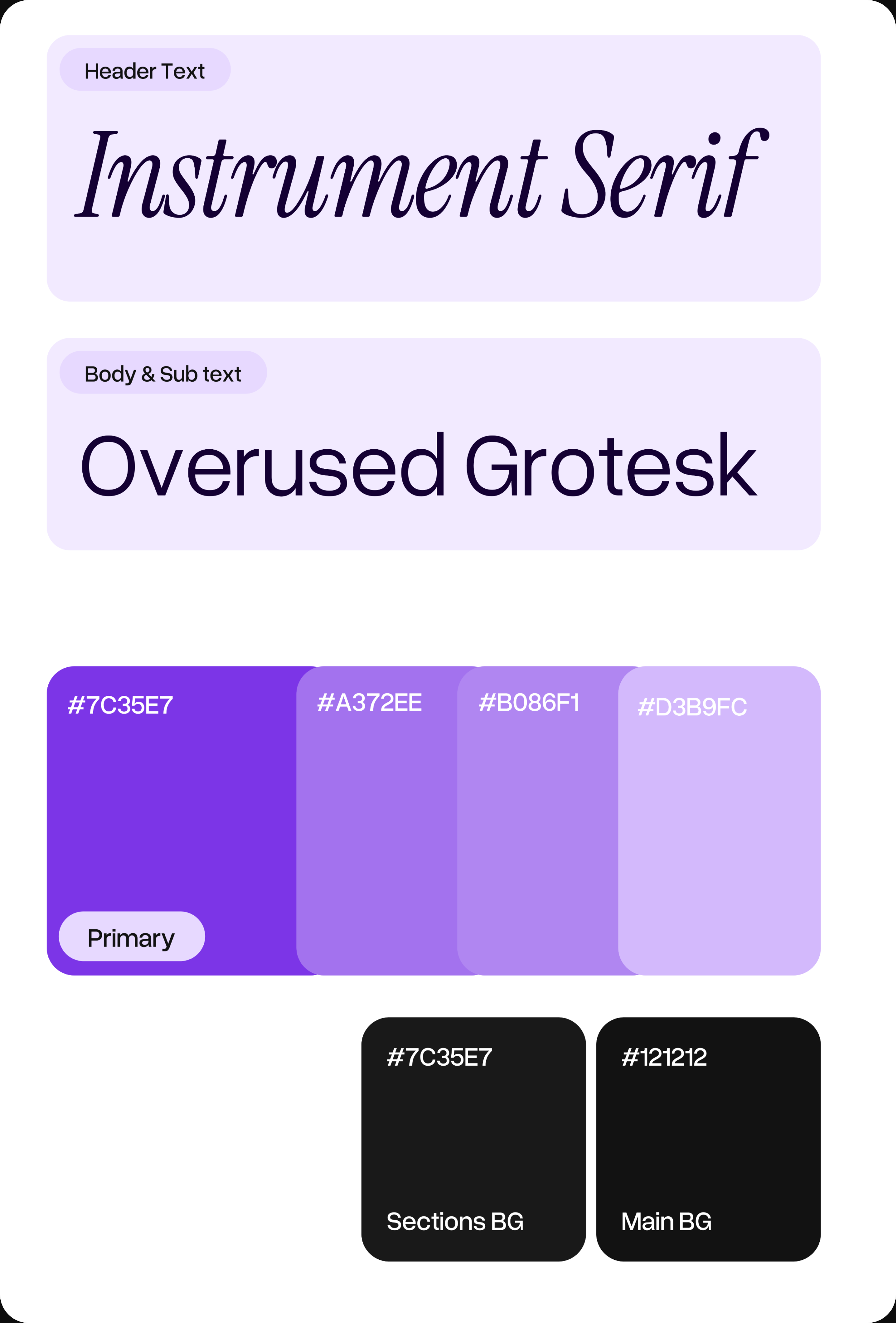
Instrument Serif for headers — it gives the product a cinematic, editorial feel that fits a movie tool — paired with Overused Grotesk for body and UI. A purple-led palette (#7C35E7 primary) against near-black section backgrounds keeps it feeling modern and AI-native without leaning on the usual chatbot blue.
The Input Experience
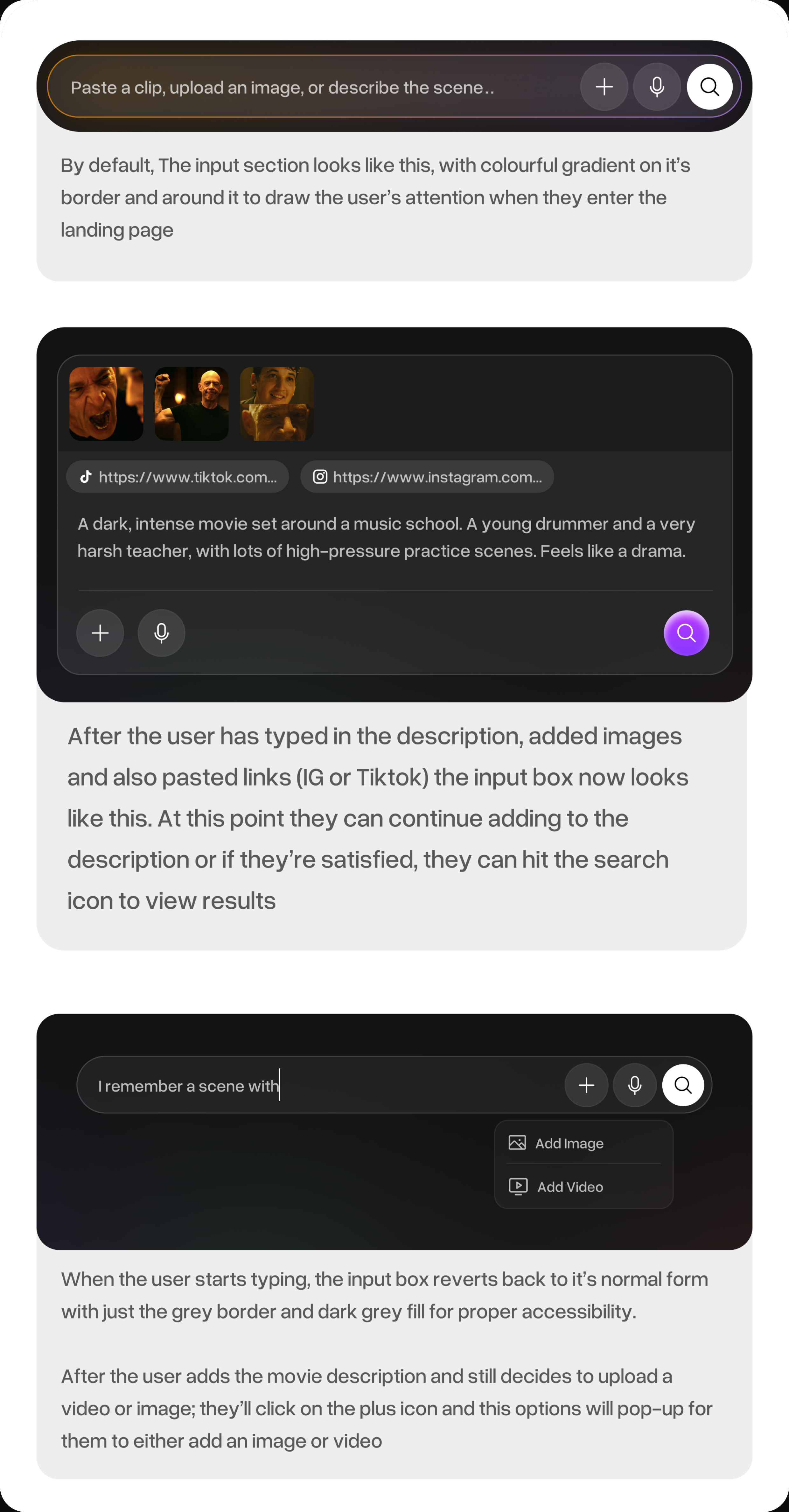
Instead of a traditional search bar, SceneThat opens with a chat-style input familiar to anyone who's used a modern AI tool. It accepts four kinds of input — text description, image upload, video clip, and social links (TikTok, X, and the rest).
By default the input carries a colourful gradient border to draw attention as you land. Once you start typing, it reverts to a calm grey field for readability. Add a description and the plus icon reveals options to attach an image or video — so the interface stays simple until you need more from it.
The Chat Experience
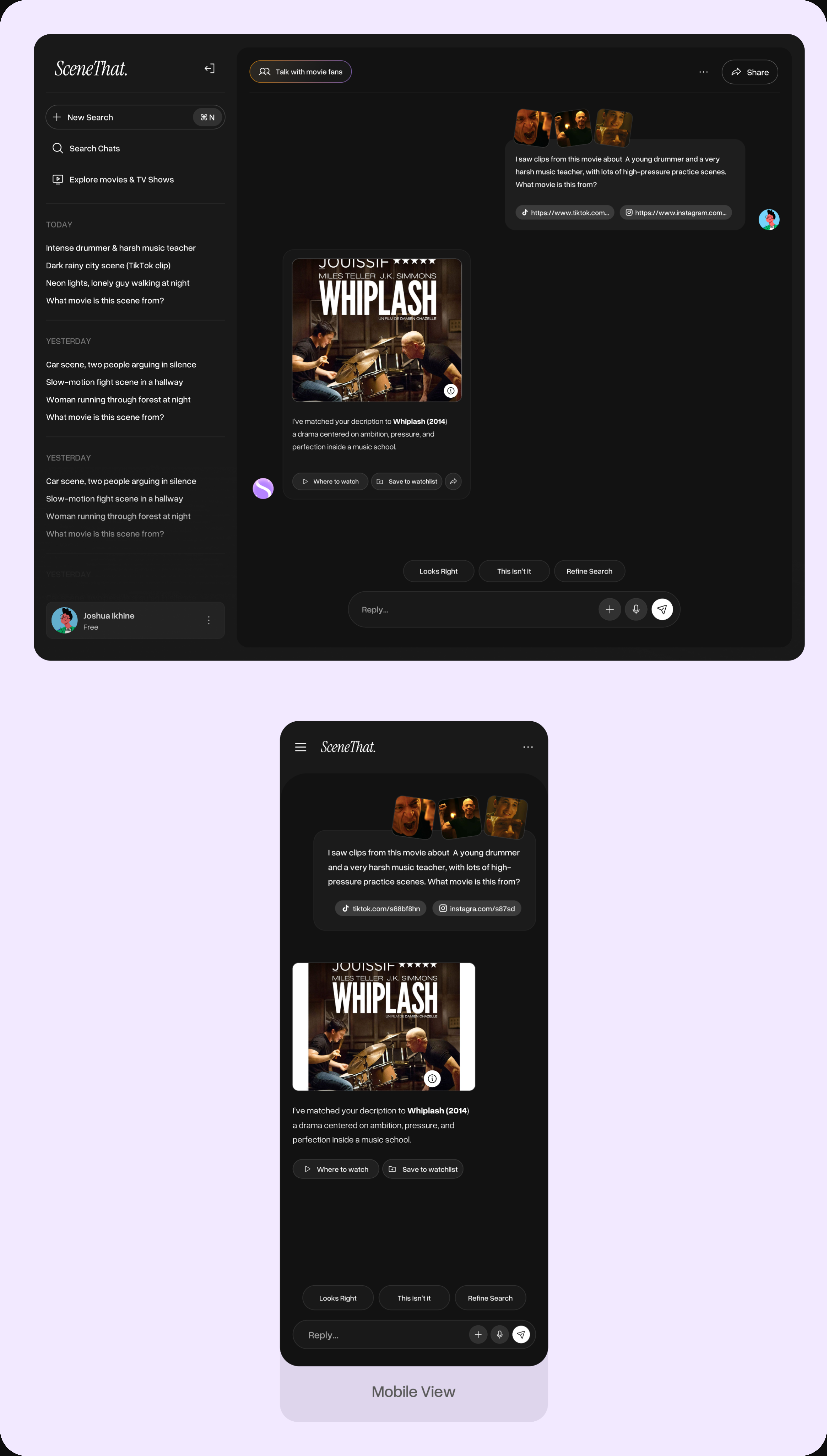
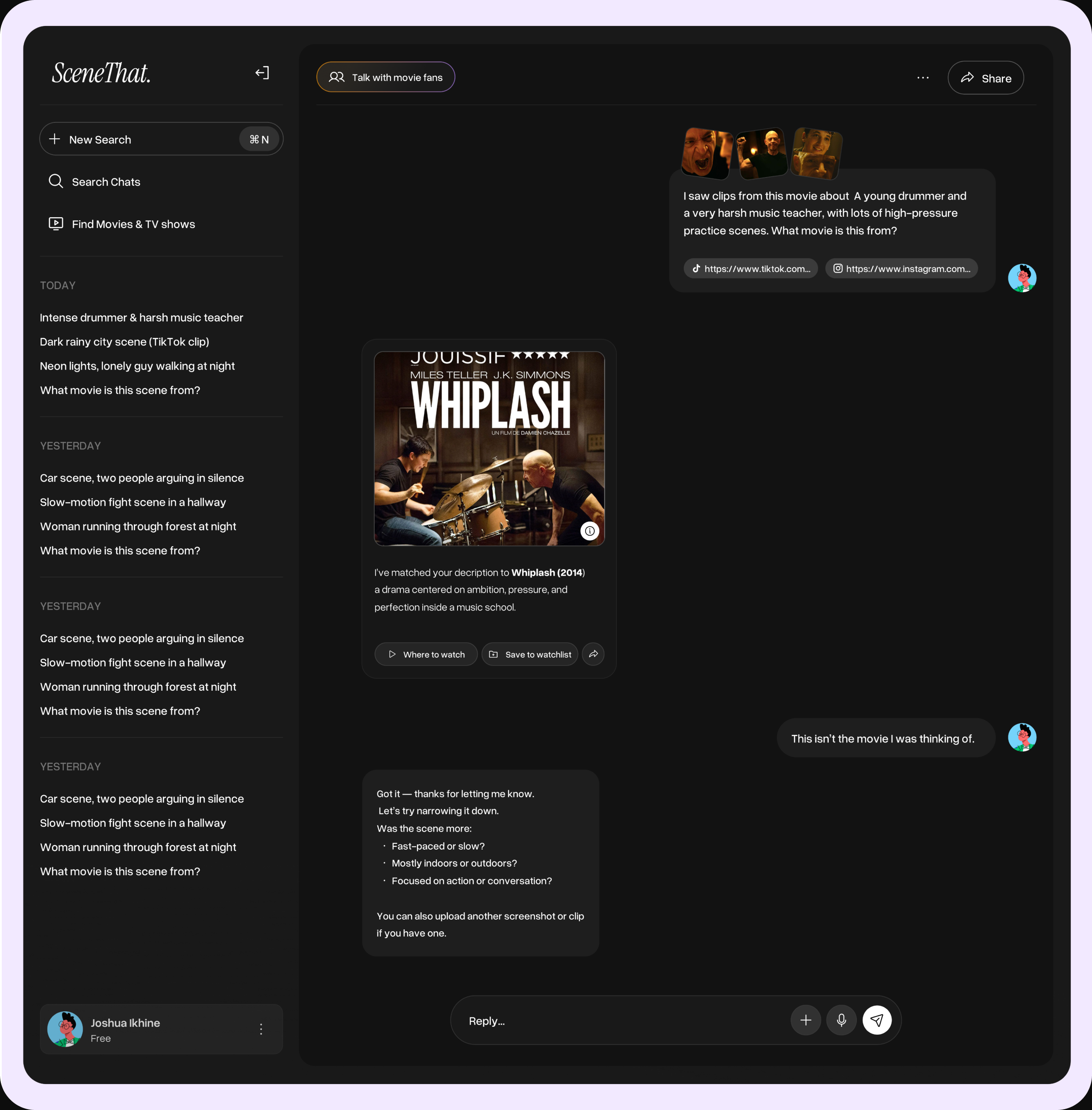
Hit search and the input becomes the first message in a chat between you and SceneThat's AI. The AI responds confidently but concisely — the movie name, the official poster for instant recognition, and a short description.
The goal at this moment is trust. The user should feel: "Yes — this thing understood what I meant." To keep that momentum, the interface deliberately doesn't stop to ask "is this correct?" Instead it offers lightweight actions — continue, refine, or reject — so the flow never turns into an interrogation.
Where the design gets hard
When the user disagrees. If someone says the match is wrong, the AI adapts immediately. No defending the suggestion, no restating confidence. It acknowledges the miss and shifts into refinement mode, prompting the user to narrow things down in plain, non-technical ways — faster or slower, indoors or outdoors, action or conversation. It's positioned as a helper, not an authority, which is what builds trust and defuses frustration.
When confidence is low
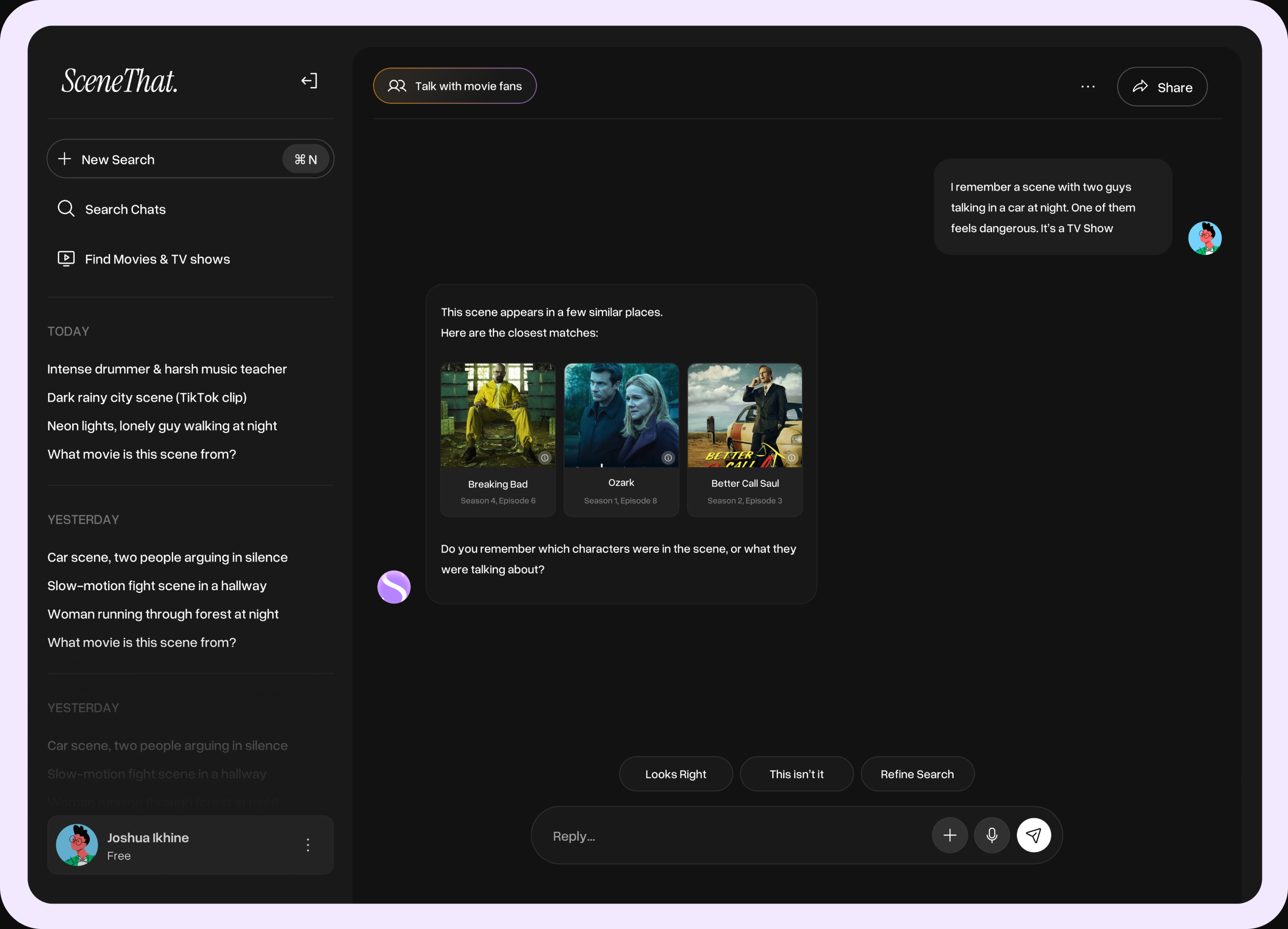
Not every scene description is clear, and the system is honest about that. Instead of guessing, it surfaces a small set of ranked possibilities and invites the user to guide the next step — pick the one that feels right, or add another detail. It reframes uncertainty as collaboration rather than failure, which respects how memory actually works: fragmented, approximate, and often emotional rather than precise.
From Discovery to Action
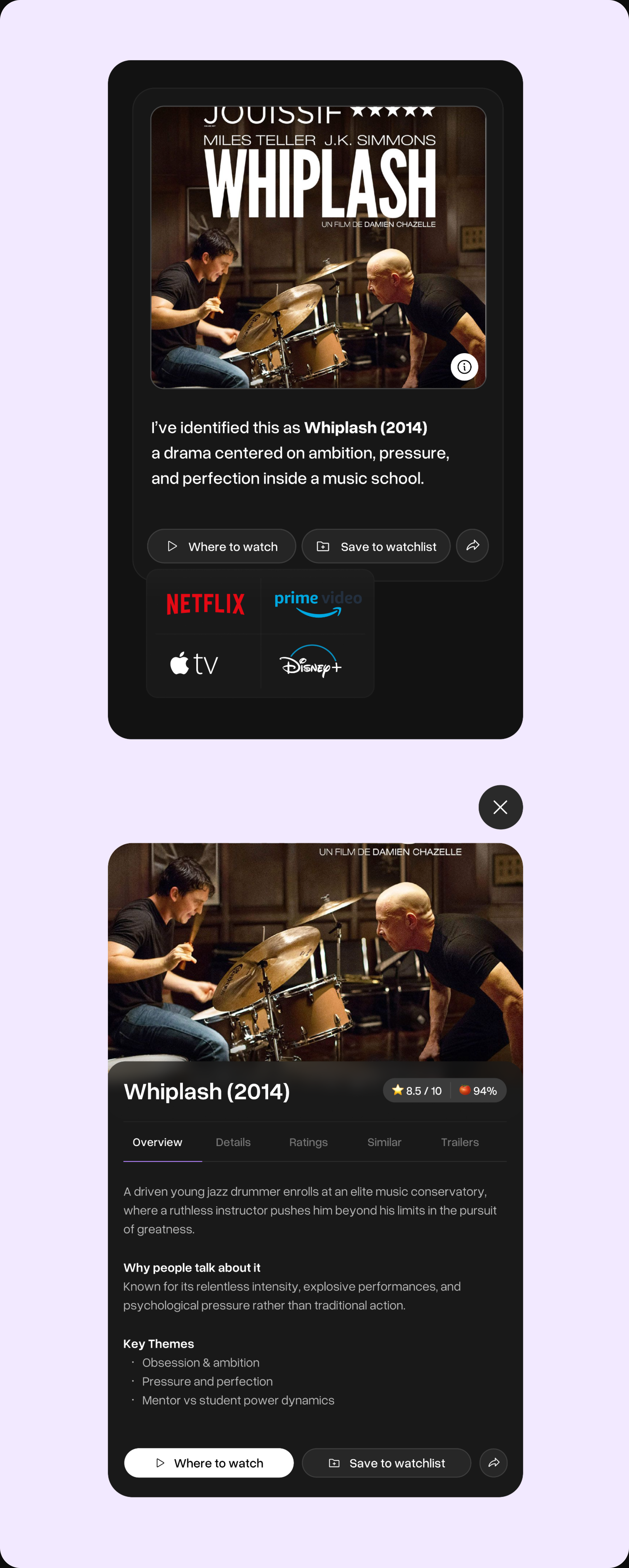
Where to watch lives right on the movie card. Rather than opening a full-screen modal or navigating away, the card expands inline to reveal streaming options — keeping the user anchored in the conversation they started. High intent, no broken flow.
The detail view. An "i" icon on the card opens a modal inside the chat, not a new page — reinforcing that discovery is all one flow. It gives depth without overload: title, aggregate ratings, a short spoiler-free description that sets tone, similar movies, and trailers. It answers the immediate question — "Is this worth my time?"
The Platform
Beyond the core loop, SceneThat is a full product:
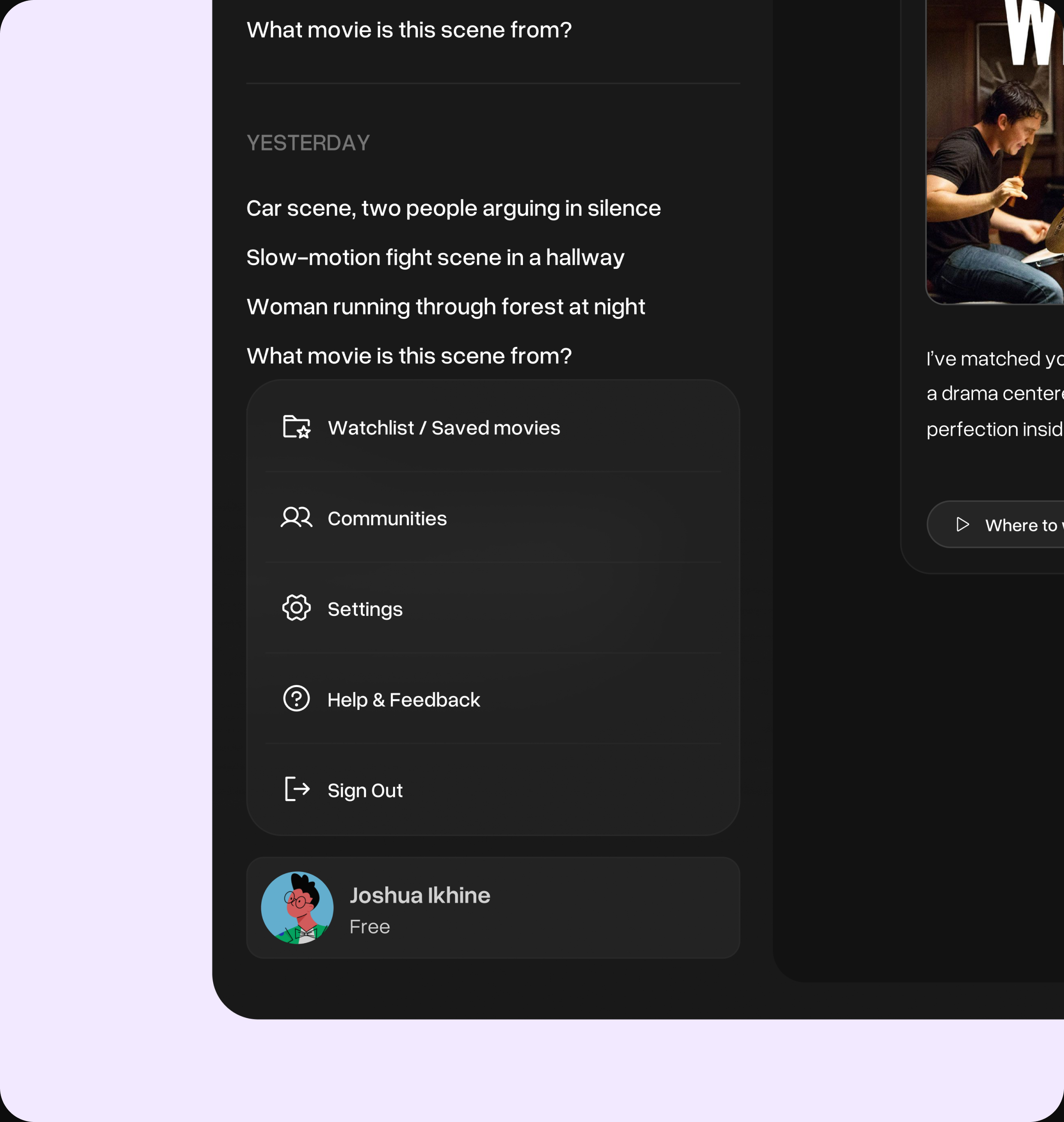
Navigation. A persistent profile entry at the bottom (avatar, name, plan) doubles as a global nav trigger. Tapping it opens a lightweight modal to Watchlist, Communities, Settings, and more — branching out without a heavy sidebar or top-nav pulling focus.
Watchlist
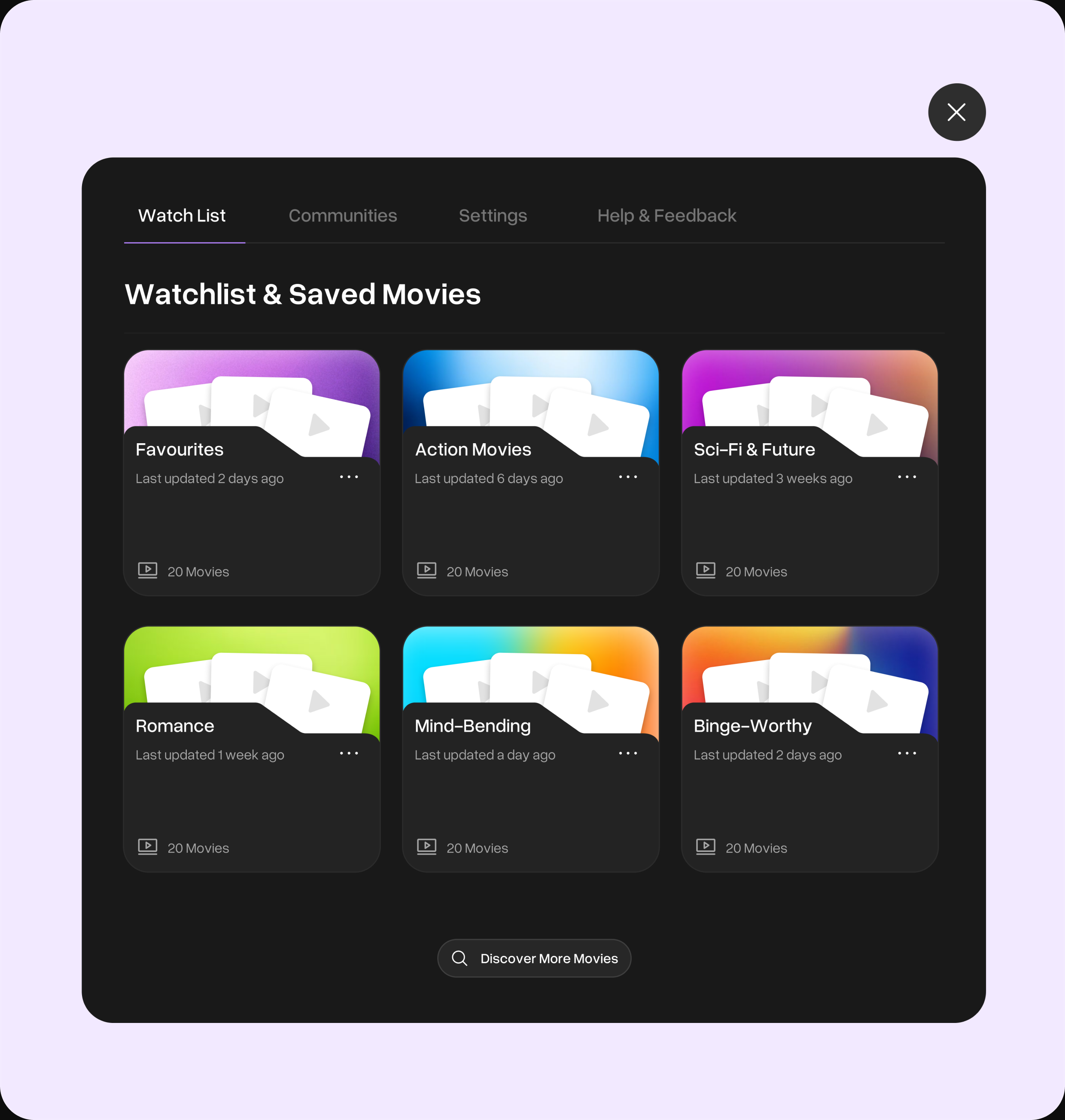
Watchlist. A memory layer. Saved movies organise into custom folders by mood or intent (Favourites, Mind-Bending, Seen on TikTok), each showing recency and count, doubling as a soft discovery surface.
Communities
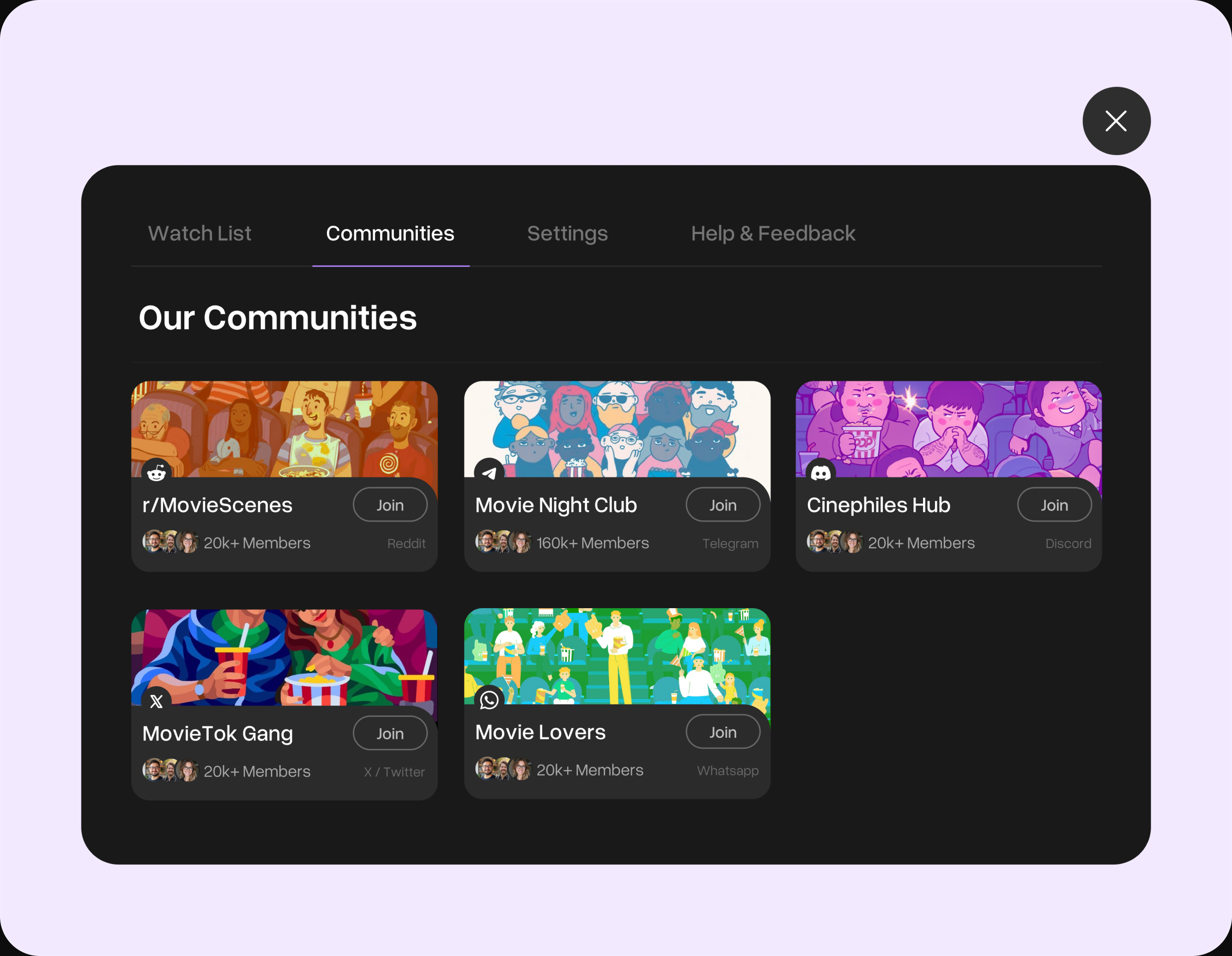
Communities. Framed as trusted extensions of discovery (Reddit, Telegram, Discord, X), on the honest premise that movie discovery is social — people love talking about what they've watched as much as watching it.
Explore
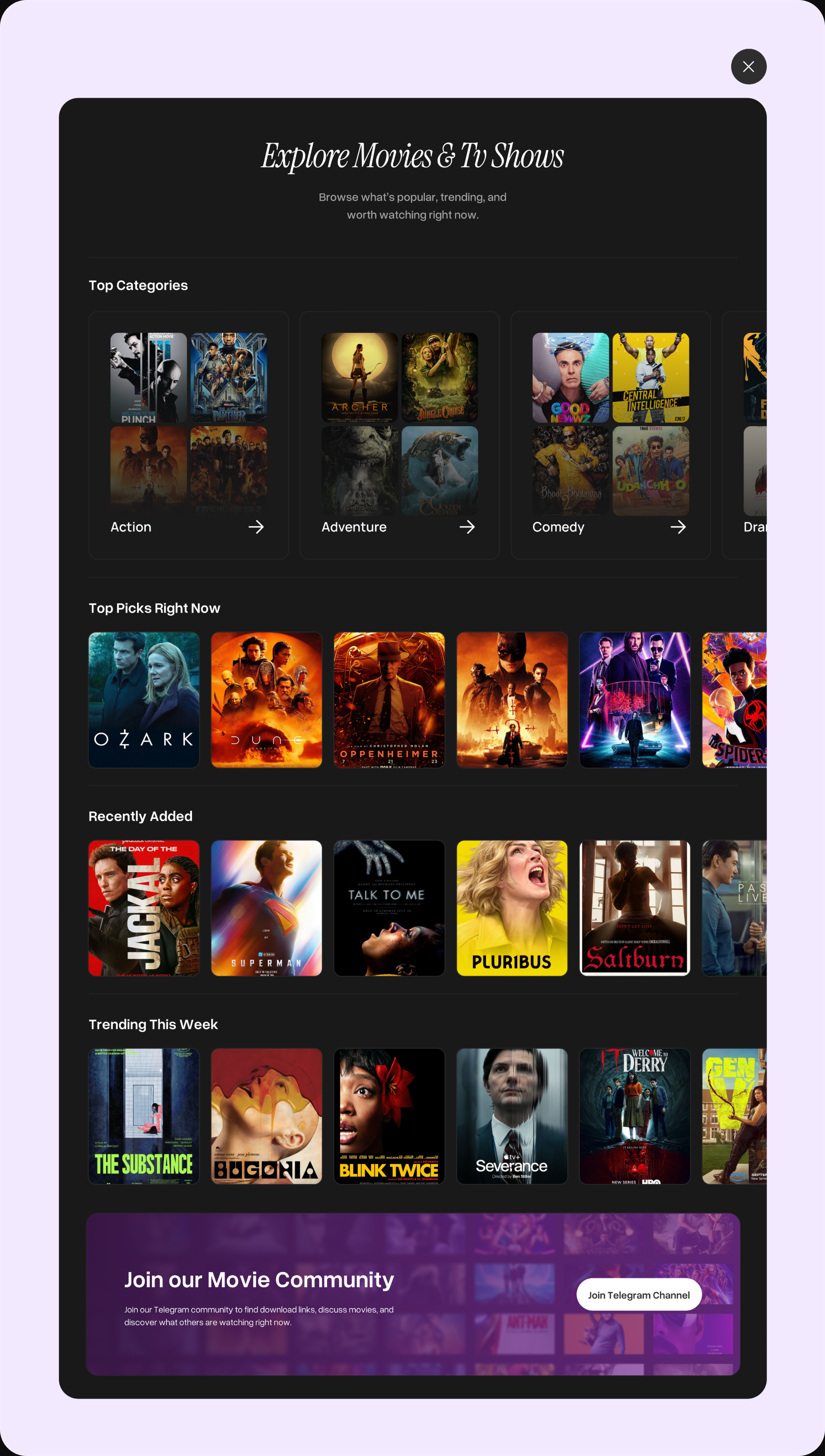
Explore. For the different mindset: "I don't have a scene in mind, I just want something good to watch." Categories and scrollable rows (Top Picks, Recently Added, Trending) for low-pressure browsing.
Sign In & Account Creation
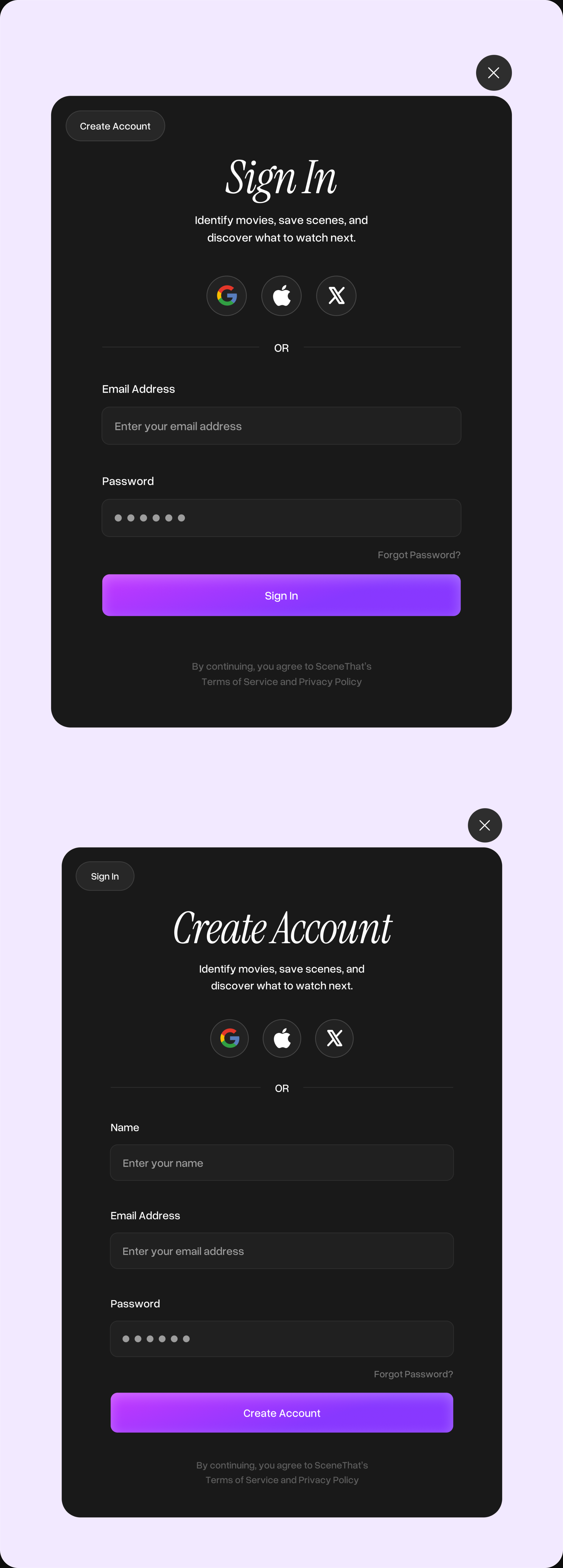
Kept intentionally lightweight — Google, Apple, or email, with social sign-in prioritised visually. No mandatory preferences or onboarding forms; personalisation happens gradually through use. Reduces friction and encourages exploration before commitment.
Conclusion
This project grew out of a familiar frustration: stumbling on a great movie clip online and having absolutely no idea what it's from. Existing platforms attempt to solve this, but many fall short when the input is vague, fragmented, or purely descriptive.
SceneThat explores how AI can step in as a more flexible collaborator — making sense of scenes, screenshots, links, and loose descriptions the way a human would, not the way a rigid search box expects. Instead of demanding perfect keywords, it's designed to listen, adapt, and respond with confidence when it can, or explore alongside the user when it can't — turning "Where is this movie from?" moments into clear, satisfying answers.
Enjoyed reading this? Thank you.
This took a bit of work to put together, so if you liked it, I’d really appreciate you sharing it. If you have a similar project in mind, let’s work together.

What People Say About Me and My Work
One of the smoothest design experiences we've had. Joshua turned complex ideas — AI onboarding, unified inbox, automation builder — into polished, intuitive flows, with a design system that kept us consistent across mobile and web.

Brian T George
CEO, Unifiedbeez

Love his work! Always professional, detail-oriented, and delivers top-quality results. He understands the vision and brings it to life better than expected. Reliable, creative, and a joy to work with — highly recommend!

Becky Idiale
CEO, Daibo Consulting

Josh redesigned our landing page and nailed it. His attention to detail and smooth communication made everything easy. The new design boosted engagement and feels more aligned with our brand. Highly recommend.

Areous A
CEO, Pixel Pioneer Studios

Joshua consistently delivers clean, thoughtful, user-centered designs. He's proactive, reliable, and communicates ideas clearly. Every project gets real creativity and attention to detail — a true asset to any design team.

Chi Onyeukwu
CEO, Njem

Working with Joshua on the Koboneer app was smooth start to finish. He understood the product, turned complex ideas into a clean, intuitive interface, and stayed open to feedback. His attention to detail made a real difference.

Solomon Okafor
CEO, Koboneer

Joshua has been an outstanding contributor at Dingpay. His design solutions are thoughtful, intuitive, and aligned with our users' needs. He works with speed and precision while keeping strong creativity and brand consistency.

Itohowo Udofia
CEO, Dingpay

Great experience working with Joshua. He pays attention to details and provided excellent communication throughout the project.

Donny Gamble
CEO, The Elevation Group

Joshua transformed the AllFoods UK site into something modern, professional, and easy to navigate. He was proactive, responsive, and cared about reflecting our brand. We've had great feedback since.

Akinyemi Arabambi
CEO, AllFoods UK



Let’s Work Together!
Whether it's a freelance project, a full-time role, or you just want a second opinion on something. Tell me a bit about what you're building and where you're stuck. That's plenty to start.


© Joshua Ikhine, 2025.
All rights reserved.
 hello@joshuaikhine.com
 +234 806 258 9858